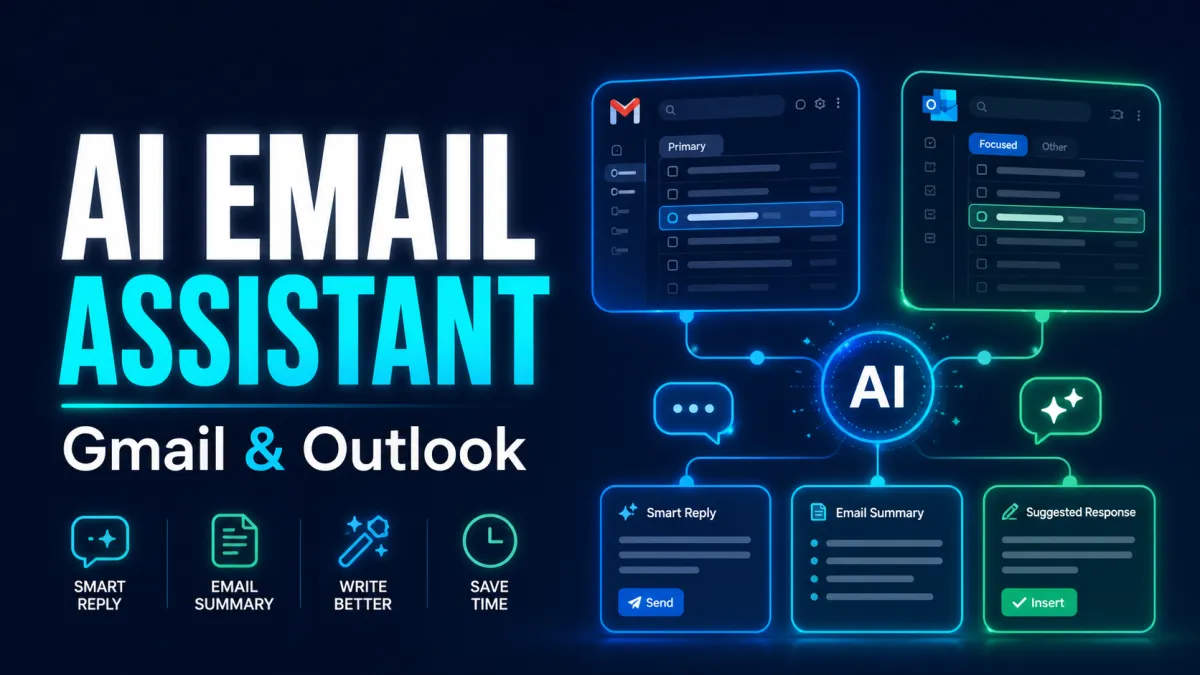
This article explores the "use cases for AI Email Assistants in Gmail and Outlook." Rather than a generic overview of AI writing, we address a specific question: Do power users really need a built-in assistant? When people first use an AI Email Writer, they often focus on "generating a complete email," resulting in content that looks polite and smooth but reads like a generic template. The truly valuable approach is to first identify the email scenario, then select the right tool, template, or prompt. An email is not an essay; its goal is usually singular: to ensure the recipient understands your intent and is willing to take the next step.
Search Intent and Target Audience
This content is intended for scenario-based searchers. The target audience isn't just people "looking to save time," but those who frequently handle business correspondence, English emails, sales outreach, client replies, marketing emails, or internal synchronization. For them, the value of AI isn't expanding a single sentence into five paragraphs, but distilling messy context into clear communication, refining overly formal phrasing into natural language, and flagging inappropriate tones. If you only aim for automated generation, you will likely end up with a batch of emails that look professional but lack specific, actionable information.
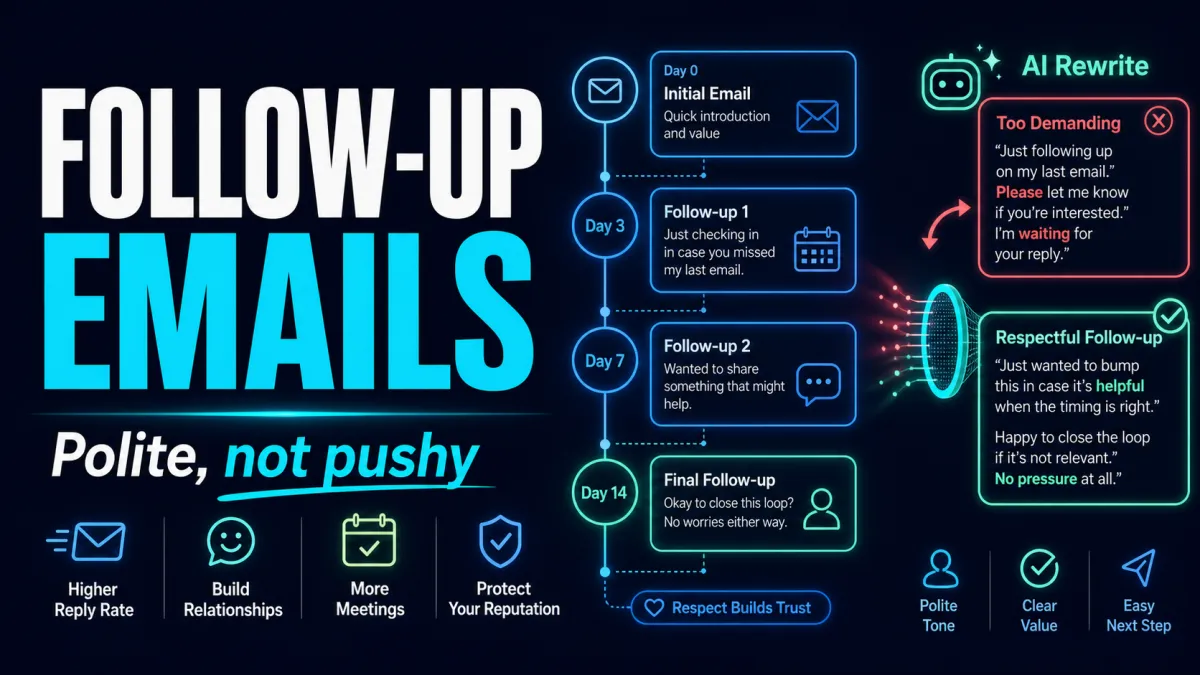
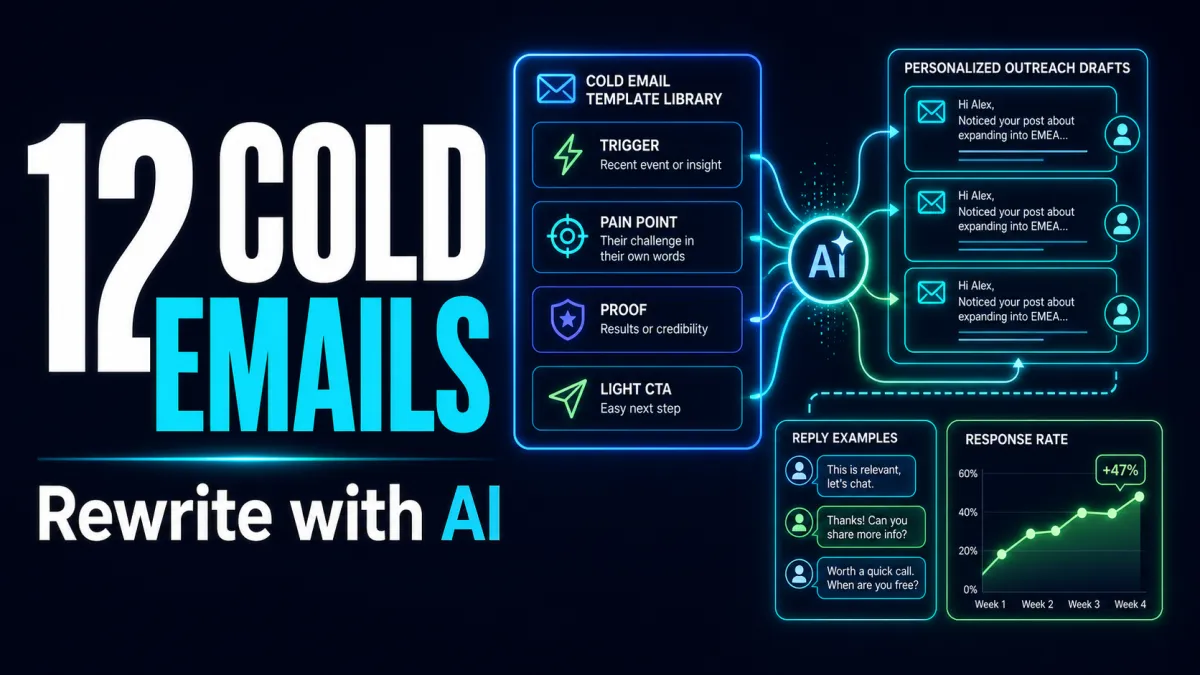
To judge whether an AI-generated email is useful, ask three questions: Who is this for, why is it being sent now, and what do you want the recipient to do? If any of these are missing, generation tools tend to fill the gaps with fluff. For example, cold emails become "we offer innovative solutions," follow-ups become "just checking in," and client replies become "thanks for your feedback." These aren't wrong, but they lack the information density required to prompt action.
How to Evaluate Your Needs
Before choosing an AI email tool or template, categorize your needs into four types. First: drafting from scratch (e.g., partnership proposals, sales outreach, event invitations). Second: polishing and rewriting (e.g., making English emails sound more natural or softening a harsh tone). Third: email context management (e.g., summarizing long threads, preparing replies, organizing tasks). Fourth: marketing and cold email workflows (e.g., sequences, segmentation, automated follow-ups, and analytics). Different needs require different tools; don't just look for "AI writing" features.
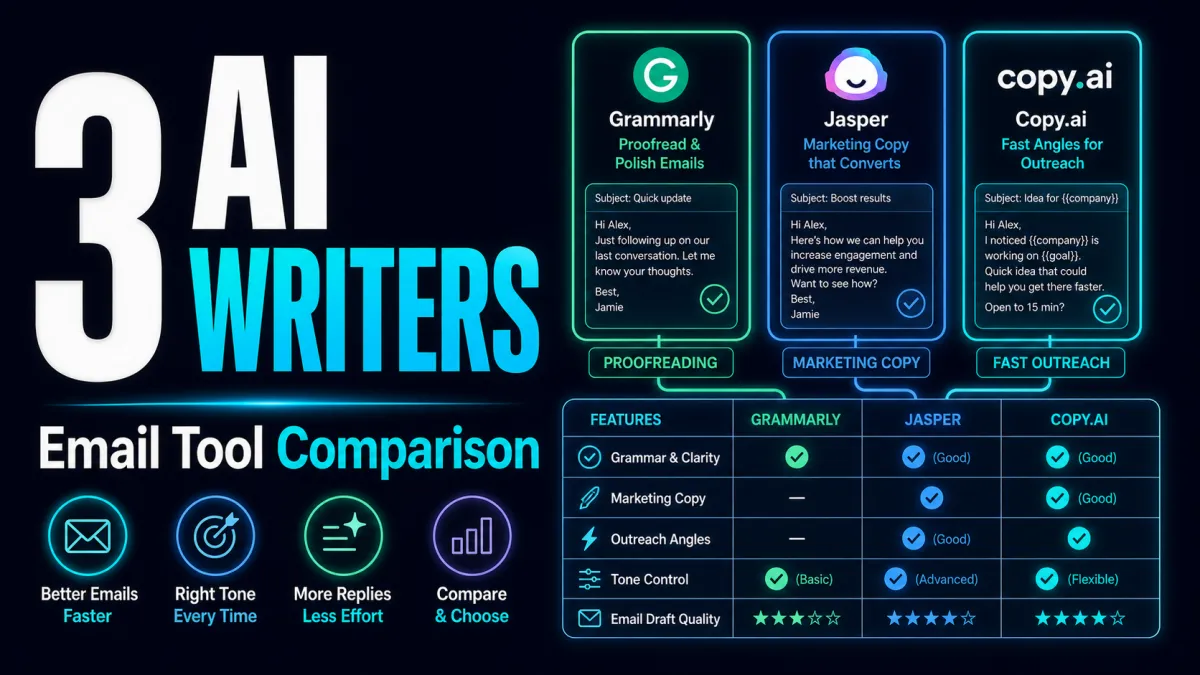
If you need quality of expression, tools like ChatGPT, Claude, Grammarly, and Wordtune are worth checking first. If you need sales outreach workflows, platforms like Saleshandy, Instantly, Smartlead, lemlist, and Apollo are more practical. If you handle high volumes of mail in Gmail or Outlook daily, assistants like Gemini for Gmail, Microsoft Copilot for Outlook, Superhuman, and Shortwave are more efficient. If you manage newsletters or e-commerce marketing, the value of MailerLite, HubSpot, Klaviyo, ActiveCampaign, and Brevo lies in audience management and automation, not just body text generation.
Best Practices
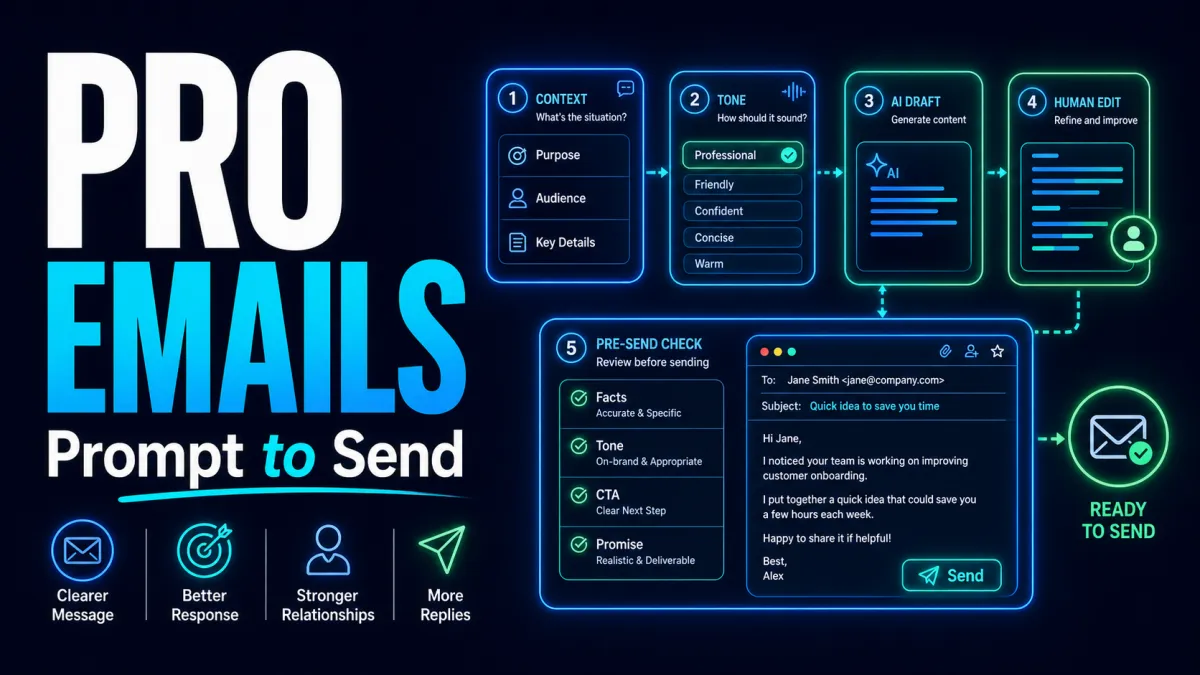
A reliable workflow is to write the facts first, then let the AI draft the email. Don't just input "help me write a professional email." A better prompt includes six elements: recipient identity, your relationship, the email's purpose, mandatory facts to include, the desired action, and tone constraints. For example: "Write to a SaaS user who tried the product for 14 days but didn't activate core features. The goal is to invite them to a 15-minute call. Do not exaggerate product benefits; keep the tone direct but not pushy like a salesperson." This input is far more important than a template title.
Don't send immediately after generation. Have the AI self-check: Which sentences lack factual support? Which expressions sound like marketing jargon? Is the CTA too heavy? Could it be misinterpreted? Then, edit it yourself. Often, the biggest problem with an AI's first draft is that it's too "complete." Real emails are usually shorter, more specific, and more selective. Especially for cold emails and follow-ups, it's better to write less than to clutter the message with information the recipient doesn't care about.
Common Pitfalls
First, don't treat AI as an auto-sending machine. Emails involve relationships and commitments; the closer you get to clients, quotes, complaints, contracts, and HR matters, the more human judgment is required. Second, don't blindly trust templates. Templates provide structure but cannot replace real-world triggers. Third, avoid "politeness stacking," where the beginning and end are overly courteous but the middle lacks a clear request. Fourth, don't use the same rhythm for every email, as this will eventually make your brand voice sound robotic.
Another overlooked issue is language style. A common problem in Chinese emails is the use of abstract words, while English emails often suffer from excessive enthusiasm. AI-generated English outreach often includes too much praise, over-promising, and overly long background introductions. Use a simple rule before sending: delete any sentence that doesn't help the recipient make a faster decision. What remains should be facts, reasons, next steps, or necessary politeness.
Tool Selection Advice
If you are an individual user, start with general writing and polishing tools; don't rush to buy complex platforms. You likely just need to make your drafts sound natural, not build an entire automation suite. If you are a sales team, prioritize lists, sequences, deliverability, reply management, and data over AI copy buttons. If you are a marketing team, focus on segmentation, triggers, A/B testing, and template management. If you are in customer support or success, look for collaboration, context, and approval workflows rather than just how pretty a single email looks.
When evaluating a tool, test it with three real emails: a cold email, a client reply, and a follow-up. Don't use the tool's built-in examples, as they are usually overly idealized. See if it can handle specific context, if it hallucinates facts, if it can adapt to different tones, and if it's easy to edit before sending. Only tools that pass these three tests are worth further trial.
Conclusion
The core of "use cases for AI Email Assistants in Gmail and Outlook" is not "can AI write emails," but "can it help you write clearer, more specific emails that get responses." A good AI Email Writer should reduce fluff, not create more pretty paragraphs; it should help you control your tone, not make business decisions for you; it should help you think faster before hitting send, rather than making emails look like uniform templates. Define your scenario first, choose the right tool, and test with real content—this is a more reliable path than chasing feature lists.